
To Ride or Not to Ride?
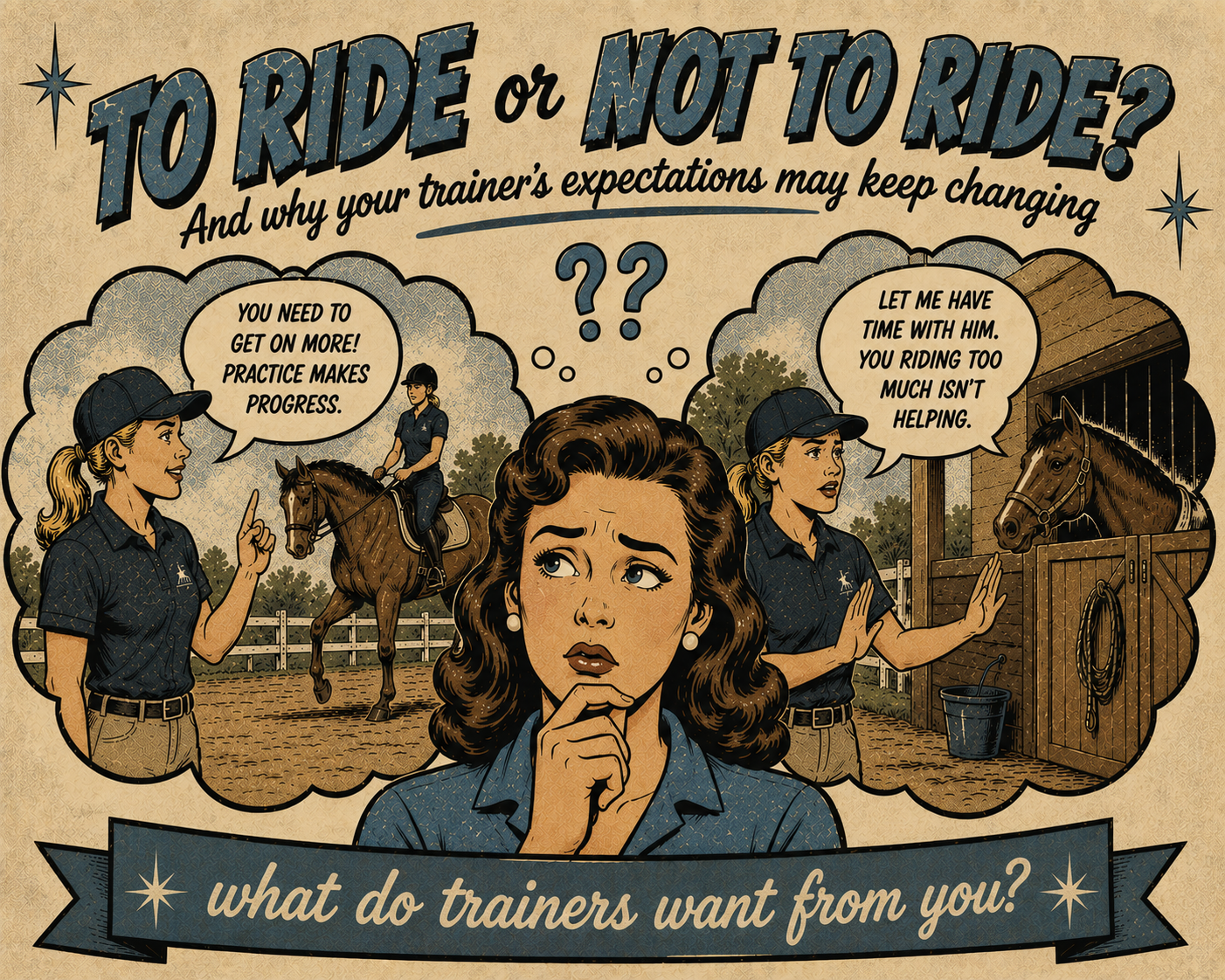
If you've ever left a lesson thinking,
"Hang on... last month you told me to stay off my horse, and now you're asking why I haven't been riding?" then congratulations. You're experiencing one of the most confusing parts of having a horse in professional training.
And honestly? I get it.
From the outside, it can feel like your trainer keeps moving the goalposts. One week they're saying, "Leave him with me for a bit." The next they're asking why you've only ridden once this week.
So... which is it?
As with most things in horsemanship, the answer is: it depends.
The "Please Let Me Cook" Phase
Whenever a new horse comes into my program, one of the most valuable things I can have is uninterrupted time with them.
Think of it like getting to know a new friend. You wouldn't expect to understand someone's personality after one coffee date, and horses are no different. I need time to figure out what motivates them, what worries them, how they learn, where they're stiff, where they're clever, and sometimes where they're just a little dramatic.
There are also moments where I'm trying to change a very specific behaviour.
Maybe the horse has learned to push through the bridle.
Maybe they've discovered that planting their feet gets them out of work.
Maybe they're anticipating every transition.
When I'm retraining something like that, consistency is everything.
Sometimes I need enough consecutive rides that the horse begins to forget the previous behavior was an option. Horse trainers often call this training a behaviour to extinction. Every ride requires consistency and repetition.
If, halfway through that process, someone unknowingly rides the horse the old way and the horse discovers, "Oh... that trick still works sometimes," we've accidentally hit the reset button.
Nobody has intentionally done anything wrong. The owner isn't trying to undo the training, but this stage of the process can be surprisingly fragile. Every ride matters because every ride is building on the one before it.
It's a little like trying to break the habit of stopping at Starbucks every time you leave the house. You've gone two whole weeks without your overpriced latte. You're feeling pretty proud of yourself. Then you hop in a friend's car on the way to the movies, and she swings through the Starbucks drive-thru.
Suddenly you remember how good it smells, how satisfying it feels to wrap your hands around that warm cup, and that little dopamine hit comes rushing back. The habit you were working so hard to break suddenly feels very available again.
Horses work in a similar way. If a behaviour that was no longer paying off suddenly works again, they're quick to think, "Worth another try." That's why, during certain stages of training, consistency isn't just helpful. It's everything.
“The real goal is to create a horse and owner who work together in a mutually beneficial partnership, where both understand their jobs and bring out the best in one another.”
Green + Green Can Equal... Creative Problems
There's another reason I sometimes ask owners to step back for a short while.
Sometimes the horse is green.
Sometimes the rider is green.
Neither of those things is a problem on their own.
Together?
Well... that's where horses and riders can teach each other a whole lot… but typically not what either should be learning.
Young horses are unbelievably impressionable. They're learning every single ride what works, what doesn't, and how humans operate.
The challenge is that beginner riders are learning too.
That means both members of the partnership are experimenting at exactly the same time.
The horse might learn they can drift through the shoulder because the rider doesn't know how to correct it yet.
They might discover they don't actually have to stop when asked.
Or they might realise they only need to move their feet when the rider kicks with all their might.
Again, nobody is failing here. It's simply that inexperienced horses don't yet know which answers are correct, and inexperienced riders are still learning which questions to ask.
Sometimes my job is to make sure the horse graduates kindergarten before we start asking another beginner to be the teacher.
Then Everything Changes
Here's where clients sometimes get whiplash.
A few months later...
I'm suddenly asking why you're only riding once a week.
I'm encouraging you to book more lessons.
I'm asking you to ride other horses.
What happened?
The horse happened.
Now the horse understands their job.
They're stronger.
They're more forgiving.
They're no longer changing dramatically every ride.
The horse has caught up!
Now it's your turn.
At this stage, the biggest thing limiting progress usually isn't the horse anymore.
It's rider mileage.
No amount of professional training can replace time in the saddle.
And here's a little secret.
Some of the fastest-improving riders I've coached aren't necessarily the ones with the fanciest horses.
They're the ones who ride everything.
Quiet horses.
Sensitive horses.
Older horses.
Young horses.
Different sizes.
Different personalities.
Every horse teaches your body something new.
Ironically, riding other horses often makes you a better rider for your own horse.
The Goal Was Never for Me to Ride Your Horse Forever
One of the biggest misconceptions about professional training is that the goal is to create a horse that only works for the trainer. If that were true, I'd have failed.
The real goal is to create a horse and owner who work together in a mutually beneficial partnership, where both understand their jobs and bring out the best in one another.
Eventually, I want to become less important. I want you to feel confident making good decisions, to understand why your horse responds the way they do, and to have the skills to solve problems before they become bigger ones.
The reality is that the horse's education and the rider's education don't always happen on the same timeline. Sometimes the horse needs extra homework before you're brought into the lesson, and other times the horse has caught up while it's your turn to put in the reps. Neither phase lasts forever, and neither one is more important than the other. They're simply different chapters in the same journey.
Trust the Season You're In
If your trainer is asking you to step back for a little while, it isn't because they don't want you involved. And if they're suddenly encouraging you to ride more, it isn't because they've changed their mind. More often than not, it's simply because your horse has reached a different stage in their education.
Good training isn't about keeping owners on the sidelines. It's about recognising when the horse needs the trainer most, and when it's time for the rider to step in and grow. Those seasons don't look the same, and they aren't supposed to. They each serve a purpose, and together they create a partnership that can thrive long after the horse leaves the training program.
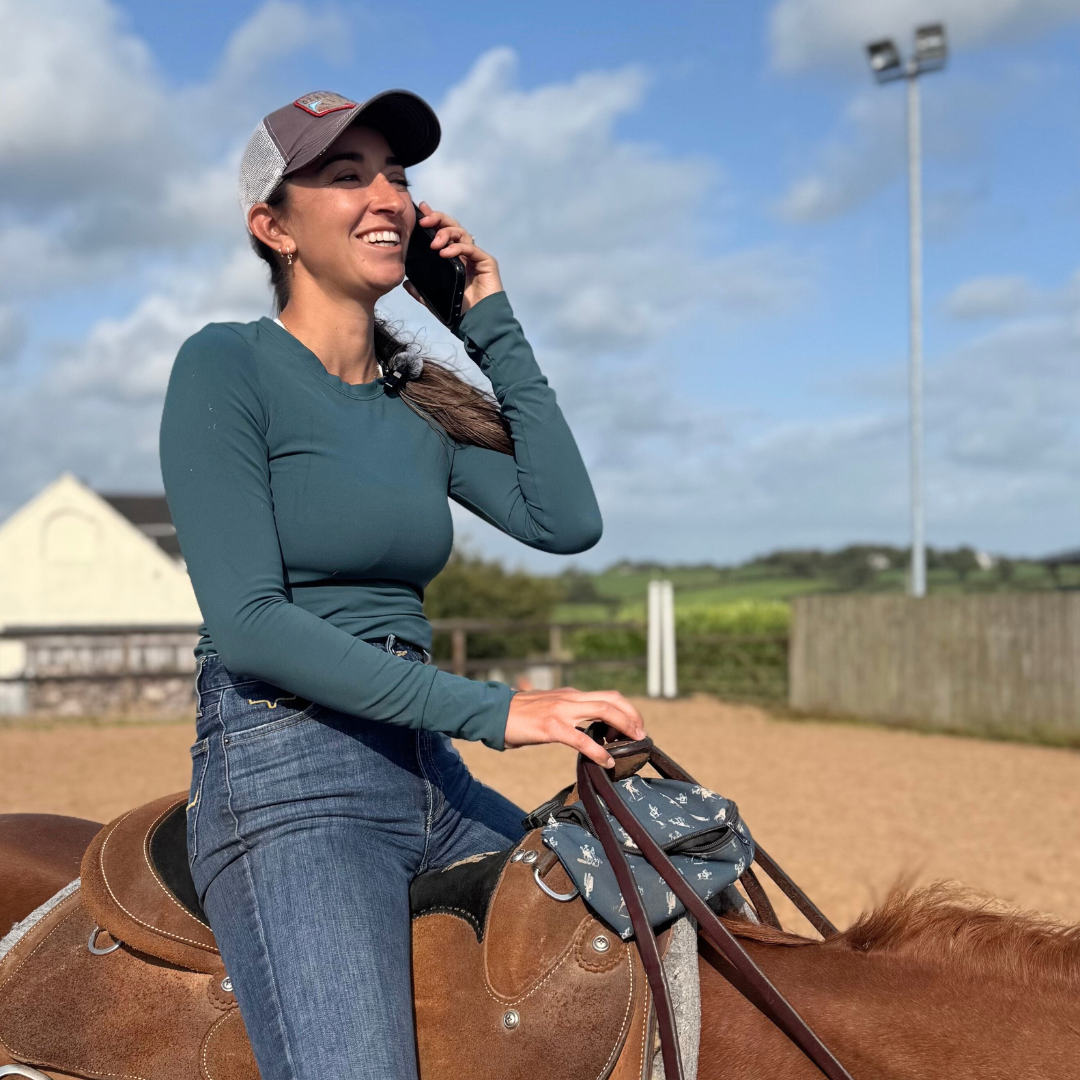
Do you know where you want to go in the show pen but are not sure how to get there?
The Competitive Roadmap Call is a 30 to 45 minute strategic planning session designed to help you map a clear path from where you are now to where you want to be.
Whether you:
Have a green three year old and dream of the World Show
Want to move from local shows to breed level competition
Want to step up into a bigger training program but don’t know where to start
Feel stuck in your riding career
This call is where we build the plan.
What We Do on the Call
This is a focused strategy session where we:
Define your competitive goals clearly
Evaluate your current situation including horse, budget, training setup, and timeline
Identify the gaps between where you are and where you want to be
Map realistic steps to close that gap
Decide what makes the most sense next, whether that is lessons, partnering with a trainer, course work, training adjustments, or strategy at the show
You will leave with:
A clear competitive target
A structured plan
Confidence in your next move
How It Works
After purchase, you will receive an email with instructions to schedule your session.
Please block out 30 to 45 minutes for your call and come prepared with your goals and ideal equestrian dreams. No dream is too big.
At your scheduled time, Crysta will call you via FaceTime Audio or WhatsApp to avoid international calling fees.
You are welcome to record the call or take notes.
Everything discussed remains completely confidential between you and Crysta. This is a safe place to think big, ask hard questions, and speak openly without worrying about barn gossip.
Who This Call Is For
This call is ideal for riders who:
Are serious about improving
Want clear direction
Value honest, straightforward guidance
Are ready to stop wandering and start planning
If you are ready to move from hoping to having a clear competitive roadmap, this is where it starts.
